
Will Hearing Aids Make Me Look Old?


The short answer is no — not with today's technology. The hearing aids available now look nothing like the devices your grandparents wore, and for many people, that concern turns out to be the biggest thing standing between them and better hearing.
Where the Stigma Comes From
For decades, hearing aids were large, visible, and carried an association with old age. That image stuck. The problem is that it no longer reflects reality, and it's causing a lot of people to delay getting help they genuinely need.
Hearing loss affects people of all ages. Many of the patients we see are working professionals, active adults, and even younger people whose hearing has been affected by noise exposure, genetics, or other factors. Waiting to address hearing loss doesn't preserve your image — it usually just makes conversations harder and pulls you back from the people and activities you enjoy.
What Hearing Aids Actually Look Like Today
Modern hearing aids are small. Today's devices sit discreetly behind or inside the ear, with many styles designed to be nearly invisible in everyday use.
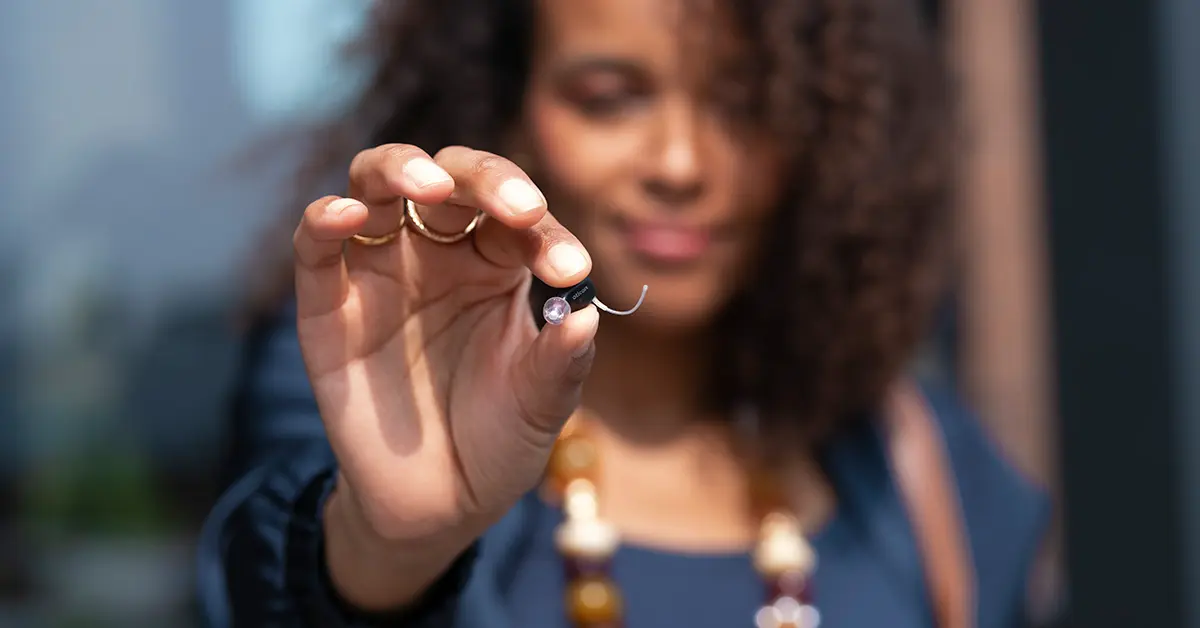
Take the Oticon Zeal, for example — one of the most recent hearing aids available. It's a completely-in-canal device that sits inside the ear, where it's not visible to most people in normal conversation. It's rechargeable, connects directly to your smartphone, and uses advanced AI sound processing. Someone looking at you would have no idea you were wearing it.
The most common styles include:
- Receiver-in-Canal (RIC): A slim device that sits behind the ear, with a thin wire running to a small speaker in the ear canal. These are popular for their balance of comfort, sound quality, and discreteness.
- Completely-in-Canal (CIC) and Invisible-in-Canal (IIC): Custom-fitted devices that sit deep inside the ear canal, largely out of sight.
- Behind-the-Ear (BTE): Sits behind the ear and connects to an earmold. Still the right fit for certain types of hearing loss, and available in compact sizes.
The Bigger Picture
Untreated hearing loss is more noticeable than a hearing aid. Asking people to repeat themselves, missing parts of conversations, or turning up the TV — these are the things others actually notice. A discreet hearing device that helps you follow a conversation is far less conspicuous than struggling without one.
There's also a broader health consideration. Research consistently links untreated hearing loss to cognitive decline, social withdrawal, and reduced quality of life over time. Getting the right support early matters.
Why a Professionally Fitted Device Makes a Difference
Over-the-counter options exist and can be a starting point for some people, but they have real limitations. A device that simply amplifies all sound doesn't distinguish between speech and background noise, and it can't be adjusted to your specific pattern of hearing loss.
When we fit hearing aids, we conduct a comprehensive hearing evaluation first — including speech-in-noise testing — to understand exactly how your hearing is affected. From there, we select and program a device matched to your hearing profile and lifestyle. We partner with all major manufacturers, including Oticon, Phonak, Starkey, Signia, Widex, and others, so we're choosing based on what fits you, not what we happen to carry.
That ongoing relationship also matters. Hearing changes over time, and your devices should be adjusted accordingly. That's something you simply don't get from a box off a shelf.
We Care for All Ages
One thing worth knowing about our practice: we see patients of all ages. You don't have to be at a certain stage of life to come in and talk about your hearing. We also offer Remote Access Audiology for those who prefer to start with a video consultation from home, which can be a comfortable first step if you're unsure what to expect.
Ready to Find Out What's Possible?
If concerns about appearance have been holding you back, we'd invite you to come in and see the options for yourself. You may be surprised by how far things have come. Our team is here to answer your questions honestly and help you find a solution that fits your hearing needs and your lifestyle — without drawing attention to itself.
We serve patients from Midland, Big Spring, Andrews, Odessa, San Angelo and beyond. Call us at (432) 689-2220 or fill out our contact form to schedule a consultation with one of our audiologists. There's no obligation — just an honest conversation about your hearing health.

Request a callback
It’s often the small questions and concerns that hold us back from making positive decisions – especially when it comes to your hearing health.
That’s why we offer no-obligation friendly calls to help answer those questions, whether on behalf of yourself or a loved one.
Simply complete the form and a member of our team will call you back shortly.
Don’t want to wait? Call us at: (432) 689-2220