
Bilateral Hearing Loss vs. Unilateral Hearing Loss: Understanding the Differences

Hearing loss is a condition that affects millions, significantly altering the way individuals connect with the world. It’s not a uniform condition; it comes in various forms, with bilateral and unilateral hearing loss being two of the most common types.
In this article, we’ll be delving into the differences between the two, their causes, and how All About Hearing 4 U can guide you through treatment and aftercare.
What Is Bilateral Hearing Loss?
Bilateral hearing loss occurs when an individual experiences a hearing impairment in both ears. This condition can range from mild to profound and can result from various factors such as aging, exposure to loud noise, genetics, or health conditions.
Understanding Unilateral Hearing Loss
Unilateral hearing loss, on the other hand, affects only one ear, leaving the other with normal hearing ability. While this might seem less severe than a bilateral loss, it presents unique challenges, particularly in localizing sound and understanding speech in noisy environments.
Causes and Differences
Both types of hearing loss can arise from similar causes, including but not limited to:
- Genetic predispositions
- Infectious diseases
- Traumatic injuries
- Prolonged exposure to loud noises
The key difference lies in the way these conditions affect daily life. Bilateral hearing loss can make all sounds seem fainter, impacting the ability to hear conversations or alarms, regardless of the environment.
Unilateral hearing loss might not reduce the overall volume of sound but can make it hard to determine where sounds come from, which is crucial in situations like driving or attending social gatherings.
Impact on Daily Life
The impact of unilateral hearing loss vs. bilateral hearing loss extends beyond the basic mechanics of hearing. Those with a bilateral loss may find themselves needing to increase volumes on devices or asking people to repeat themselves more often.
For those with an unilateral loss, the challenge is often one of spatial awareness –misjudging the direction of traffic or struggling to focus on a conversation in a crowded room can be daily occurrences.
Treatment and Aftercare
Treatment for both types of hearing loss often involves hearing aids or assistive listening devices. For bilateral loss, hearing aids are typically used in both ears, which can restore balance and improve overall hearing. Unilateral loss may be treated with a single hearing aid, a CROS device that transmits sound to the hearing ear, or even with bone-anchored hearing systems, depending on the cause and severity.
All About Hearing 4 U is dedicated to providing personalized treatment plans. Our approach begins with a thorough assessment to determine the type and severity of hearing loss. From there, we explore a range of treatment options tailored to each individual’s needs and lifestyle.
The Journey to Better Hearing
For anyone experiencing a hearing loss, the path to improved auditory health involves both treatment and ongoing aftercare. At All About Hearing 4 U, we’re committed to not just fitting you with the right device but also ensuring that you have access to the support and resources you need to thrive.
Regular check-ups, device maintenance, and hearing assessments are all part of our comprehensive aftercare program.
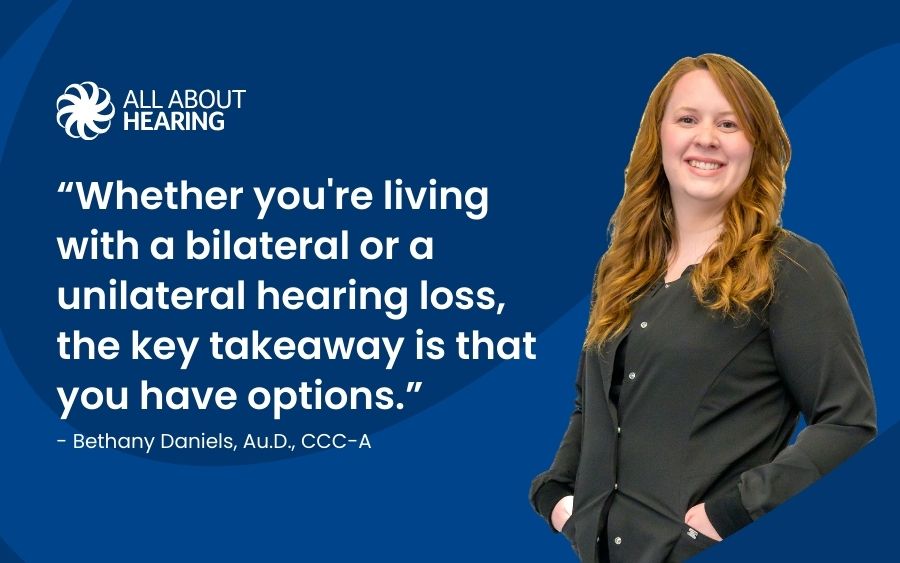
Whether you’re living with a bilateral or a unilateral hearing loss, the key takeaway is that you have options. Understanding your condition is the first step toward taking control of your hearing health. At All About Hearing 4 U, we’re here to help you navigate those options, offering cutting-edge treatment and compassionate aftercare.
Get in touch with us today to see how we can help you or a loved one!

Request a callback
It’s often the small questions and concerns that hold us back from making positive decisions – especially when it comes to your hearing health.
That’s why we offer no-obligation friendly calls to help answer those questions, whether on behalf of yourself or a loved one.
Simply complete the form and a member of our team will call you back shortly.
Don’t want to wait? Call us at: (432) 689-2220